Most Kenyans Know 2 Ways to Own Real Estate — There’s a Third
Most Kenyans already believe in real estate. The real question is what kind of real estate you’re buying into.
For most people, the choice comes down to two familiar options: buy a plot or buy a house. Both have worked for generations of investors. But both also come with real limitations — limitations that a third, lesser-known option was built to solve.
Let's walk through all three honestly:
Door 1: Idle Land
The classic Kenyan investment: buy a plot and wait. Prices can range from around KES 150,000 for upcountry land to several million shillings near Nairobi. If the location grows and demand rises, the value may appreciate over time. If it doesn’t, the land simply sits there tying up your capital.
The honest tradeoffs:
- No income while you hold. The land sits idle as you wait for appreciation, generating no cash flow in the meantime.
- Liquidity is poor. Selling a plot can take months or years, and often at a discount if you need cash quickly.
- Title and regulation risk. Disputes, fraudulent titles, and zoning surprises are common enough that experienced buyer's budget for legal due diligence before every purchase.
Idle land can absolutely work — but it's a bet on appreciation, made with patient capital and local knowledge.
Door 2: A Single Property
Buying a house or apartment is the goal most Kenyan professionals work toward. You save, you maybe take a mortgage, and you become a landlord. Done well, this builds real wealth over decades.
But running a single property is a small business, not a passive investment:
- A vacant month is a 100% loss of income for that month — there's no portfolio to absorb it.
- Maintenance, tenant disputes, and service-charge issues land on you, or on a manager you have to supervise.
- Your capital is concentrated in one building, in one neighbourhood, exposed to one local market.
For people who want the property and the role of landlord, this is the right door. For people who only wanted the income and the appreciation, it's often more work than they expected.
Door 3: A Portfolio of Student Residences
The third option is portfolio-based real estate ownership. Through Vuka, you buy a share in a portfolio of purpose-built student housing — currently 8 Qwetu and 4 Qejani residences serving over 10,000 students near universities including USIU, Strathmore, Daystar, and Kenyatta.
Why student housing specifically: University intakes are predictable and supply in most Kenyan campus towns is still below demand. That creates a more consistent occupancy pattern than most other property types. The buildings in the Vuka portfolio recorded an average occupancy of 87% last year.
The minimum entry is KES 2,500 — small enough to test the waters and affordable for the average Kenyan.
Why Choose Vuka?
1. Tangible Assets: You invest in real, income-generating properties.
2. Professional Management: All aspects, from tenant management to maintenance, are handled professionally.
3. Regulated and Secure: Supervised by the Capital Markets Authority, ensuring your investment is protected.
4. Liquidity: Access your funds quickly if your circumstances change.
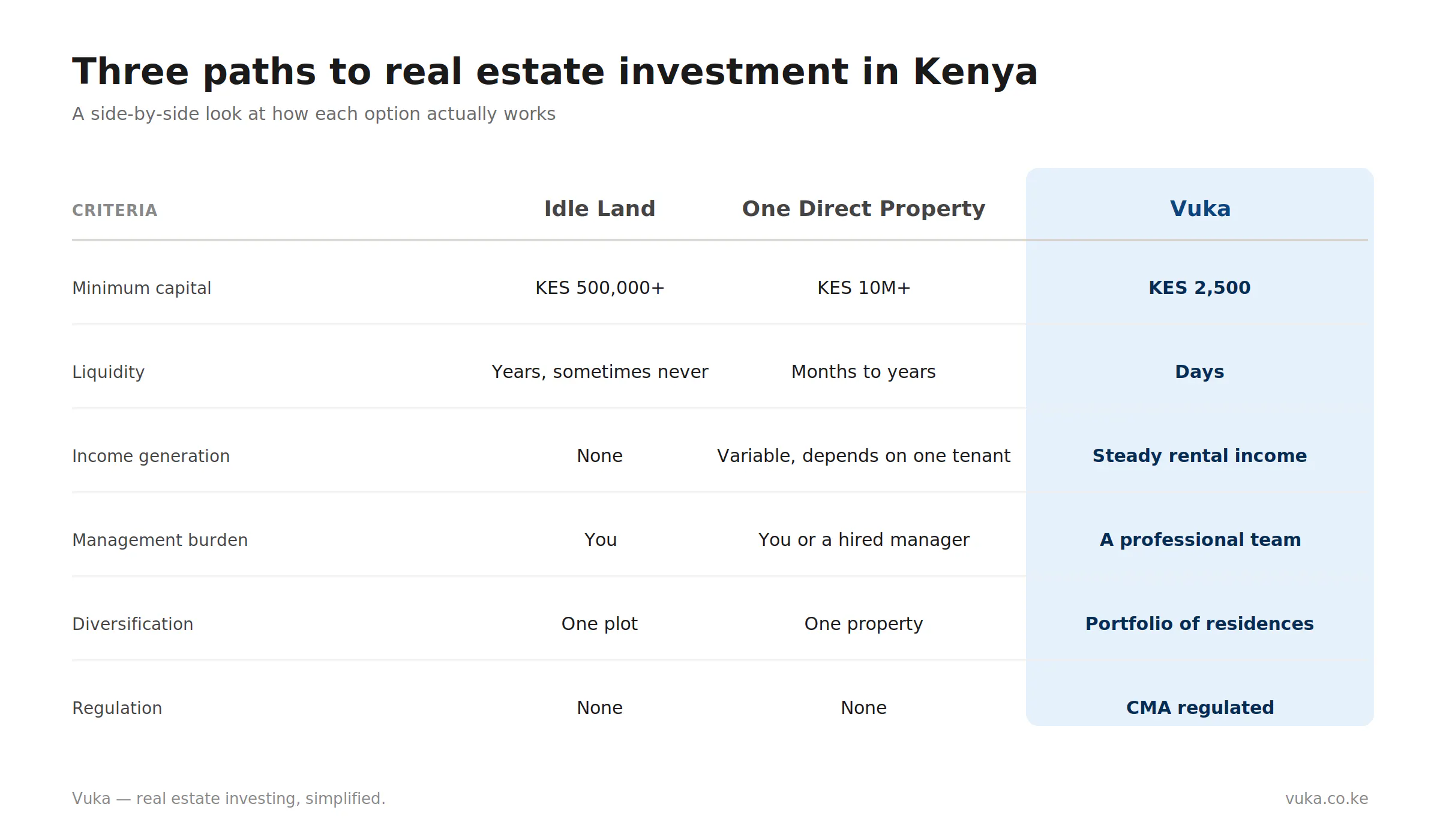
The Three Doors, Side by Side
Who Vuka Is For
Vuka was built for a different kind of investor: someone who wants their money working in real estate today, in amounts that fit an ordinary salary, without the stress of managing tenants, repairs, or service charges.
This is also how large professional investors approach real estate. Pension funds and institutional investors rarely rely on a single building or one tenant alone. Instead, they spread capital across multiple income-producing assets to create steadier, more predictable long-term returns.
Vuka brings that same approach to everyday investors who don’t have billions of shillings to deploy.
The Bottom Line
Three doors, three different relationships with real estate. Idle land asks for patience. A single property asks for time and effort. A portfolio of student residences asks for neither — just a decision to start.
If that's the door you want to step through, you can open a Vuka account for KES 2,500 and put your first share to work this week.